
Home / Blog / Medical Practice SEO in Pittsburgh and Ohio: 2026 Guide
Local SEOMedical Practice SEO in Pittsburgh and Ohio: 2026 Guide
Medical practice SEO for Pittsburgh and Ohio: set up Google Business Profile, service pages, reviews and AI search the right way to earn more patient calls.

- Medical practice SEO works when your Google Business Profile, service pages and reviews all say the same true things about who you treat, where, and how to book.
- Google gives health content extra scrutiny and says trust is the most important part of what it calls E-E-A-T, so show real doctors, real credentials you can document and clear sourcing.
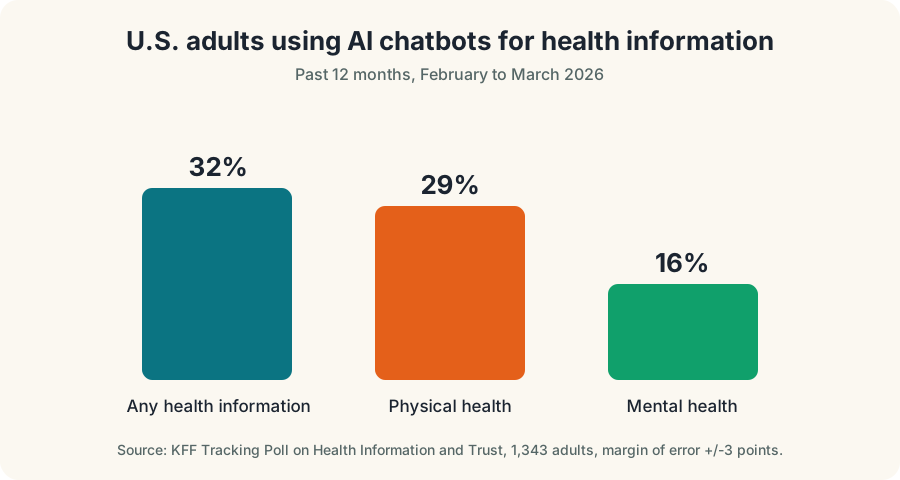
- A KFF poll fielded in February and March 2026 found 32% of U.S. adults used AI chatbots for health information in the past year, and 41% of those users wanted to look things up before deciding whether to see a provider.
- Google's rules say a practice with several doctors at one address should have a location profile, and each public facing doctor can have a separate profile named only for the doctor.
- This guide is marketing education, not medical, legal or compliance advice. Ask your compliance advisor about privacy rules before adding tracking or forms.
Medical practice SEO works when your Google Business Profile, your service pages and your reviews all tell the same true story about who you treat, where you are and how a patient books. In Pittsburgh and across Ohio, that consistency is what moves a practice from hard to find to the first call a worried patient makes.
This guide covers how patients search, what Google expects from health websites, how to set up profiles for a practice and its doctors, what to put on your pages, how to handle reviews safely, and what AI search changes. It is written for practice owners and office managers, not for specialists in search.
How patients search before they book
Patient searches usually fall into three groups. Each needs a different page.
| What the patient types | What they want | Your page or asset |
|---|---|---|
| "urgent care near me" or "dentist Squirrel Hill" | A nearby option open now | Google Business Profile with correct hours and phone |
| "knee pain treatment Pittsburgh" | A provider for a specific problem | A service page for that condition or procedure |
| "is back pain serious" or "what happens at a first visit" | Information before deciding | A clear, sourced article or FAQ written by a clinician |
Many practices only invest in the third kind, because it feels like what a doctor should publish. The first two usually bring more bookings. Do all three, in that order.
KFF's March 2026 poll shows why the third kind now matters in a new way. Of adults who used AI chatbots for health information, 41% did so to look something up before deciding whether to see a provider. Among all users, 29% asked about physical health and 16% about mental health. A well written page on your own site is one of the few places a patient can find an answer that comes from a real clinician in their own area.
What Google expects from health websites
Google does not publish a secret list for medical sites, but it does publish guidance on what it wants from helpful content. Three points matter most for a practice.
- Trust comes first. Google describes E-E-A-T, which stands for experience, expertise, authoritativeness and trust, and says trust is the most important part. It is not a single ranking factor, but it describes what Google wants its systems to reward.
- Health topics get extra care. Google calls topics that can affect health, safety or finances "Your Money or Your Life" and says its systems give more weight to signals of reliability on them.
- Say who wrote it and how. Google suggests clear bylines and background on authors. Do not invent credentials. If an AI tool helped write a page, tell readers when they would reasonably want to know.
In practice this means every clinical page should name the clinician who reviewed it, state their real license and specialty, and cite a recognized source for any medical claim. If you cannot document a credential, leave it out.
Set up your Google Business Profile the right way
For local searches, your Google Business Profile is often what a patient sees before your site. Google says local results are ranked on relevance, distance and prominence, and that you can improve relevance and prominence but not distance. Whitespark's 2026 survey of local SEO experts agrees that the profile and its categories rank among the top local ranking signals.
Name, address and phone
Google's guidelines say your name should match your real world name on your signage, website and paperwork. For medical practices, keep it to the practice or practitioner name. Do not add taglines, phone numbers, hours or service descriptions. Stuffing keywords like "best Pittsburgh dentist" into the name can get a profile suspended.
Use a local phone number that connects to the location where possible, and an address where patients are actually seen. A rented mailbox where no care is delivered is not eligible, per Google.
Practice profile and doctor profiles
Google's guidance on practitioners is specific. Doctors, dentists and similar professionals count as individual practitioners. A practitioner may have a dedicated profile if they work in a public facing role and can be contacted at the verified location during stated hours. Support staff should not create profiles. A practitioner should not create multiple profiles for different specialties.
When several practitioners work at one location, Google says the organization should create a profile for the location, and each practitioner's own profile should be named only for that practitioner, not the organization. A solo practitioner inside a branded organization should share one profile in the format "[brand]: [practitioner name]."
Categories, hours, services and photos
Choose the primary category that best describes the main care you provide, then add secondary categories only for real services. Keep hours accurate, including holidays. If you operate by appointment only, Google says not to list hours. Add real photos of the entrance, parking, waiting area and team, with patient consent where people appear, and never post anything that shows a patient or their records.
If you want the full process, see our Google Business Profile optimization page and our guide to ranking on Google Maps. To see where you stand against nearby practices, try our FREE Map-Pack Showdown.
Build the pages patients and Google both need
A practice website usually needs these page types. Start with the ones that bring bookings.
- A page for each main service. One page per treatment, procedure or specialty, written around what a patient asks.
- A page for each location. Address, parking, public transit, hours, doctors who see patients there and a map.
- A page for each clinician. Photo, specialty, real credentials, languages, and how to book.
- An insurance and costs page. Which plans you accept and what a first visit involves. Keep it accurate and dated.
- A patient FAQ. Short, honest answers about booking, first visits and what to bring.
- Educational articles reviewed by a clinician. Cite recognized sources and show the review date.
Write like a clinician explaining to a patient
Start each page with the answer. A page on rotator cuff treatment should say who it helps, what the options are and when to call, within the first few sentences. Use headings that match patient questions, short paragraphs and no jargon without explanation. Include a clear way to book on every page, and keep the phone number tappable on mobile.
Local pages for Pittsburgh, Ohio and beyond
If you serve more than one area, write each page for the people who live there. A practice in Oakland and a practice in Boardman have different parking, traffic and neighborhoods. A page that only swaps the city name tells Google and patients you have little to say. If you cannot add something true about a place, do not create a page for it. Our Pittsburgh SEO services and local SEO in Ohio pages explain how we handle multi-location work.
Claims to avoid
Do not promise outcomes, cure rates or guaranteed results. Do not use before and after claims you cannot document. Do not use patient stories unless you have written permission and your compliance advisor approves. The FTC finalized a rule in 2024 banning fake reviews and testimonials, including fake or AI generated ones, so any testimonial must be genuine.
Reviews: what to ask for and what to avoid
Reviews are part of prominence, and they are the first thing many patients read. The rules are tighter for medical practices because of privacy.
- Ask every patient, not only happy ones. Google's contributor policy bars selectively asking only for positive reviews.
- Never offer rewards. No gifts, discounts or entries in a draw in exchange for a review.
- Never discourage negative reviews. The FTC's rule also bars threats and intimidation to suppress them.
- Reply to every review, carefully. Do not confirm that a reviewer is a patient or mention any health detail. Thank them, speak in general terms and invite them to call.
- Get compliance sign off on your reply templates. Our FREE review reply generator can help with tone, but a medical practice should review every template against its privacy rules.
We cover the full process in our review management service overview.
Technical basics for a practice website
Patients are often on a phone and often stressed, so the site must load fast and be simple to use. Google's Core Web Vitals give targets for loading, responsiveness and stability. Aim for the main content to load in 2.5 seconds or less, responses within 200 milliseconds and little layout shifting, judged on mobile.
Make sure each page has a unique title and headings, that important pages are not blocked from search, and that your phone number and address match your profile exactly. Add structured data only where it matches visible content, such as your organization, locations and clinicians. Google says no special schema is needed for its AI features.
What AI search means for a practice
More patients now ask an AI tool before they call. KFF found 32% of U.S. adults used AI chatbots for health information in the past year. Of those users, 58% of the ones who asked about mental health and 42% of those who asked about physical health did not follow up with a doctor or other health professional afterward. That is a reminder that AI answers are not care, and that patients sometimes need a reason to come in.
Here is what is known about how to show up. Google says there are no extra requirements to appear in AI Overviews or AI Mode, and no special markup is needed. A page has to be indexed and eligible to appear in Search with a snippet. Whitespark's 2026 expert survey adds an AI search score to local factors and notes that mentions of your business on other trusted sites carry weight. That is expert opinion, not a Google rule.
So what can a practice do?
- Make your facts consistent. Name, address, phone, hours, insurance and doctors should match on your site, your profile and trusted directories such as your hospital affiliation or professional association.
- Write direct answers. Put a clear answer under each patient question on your pages.
- Show real clinicians. Names, specialties and credentials help patients and give machines clear facts.
- Keep reviews honest and recent. Real reviews help both patients and search.
- Test yourself monthly. Ask common patient questions in a few AI tools and note whether your practice appears and whether the facts are right. Our FREE AI Visibility Test is a quick start.
If an AI tool states something wrong about your practice, such as old hours, correct it at the source, meaning your profile, your site and your listings. See what AEO is and our Pittsburgh AI search optimization page for more. No one can guarantee an AI mention, so be careful with anyone who does.
A 90 day plan for a Pittsburgh practice
- Days 1 to 15: audit. Search for your practice, each doctor and each location. List duplicates and wrong facts. Record calls, bookings and the source of each.
- Days 16 to 30: fix the foundation. Correct the profile, merge duplicates, align facts across directories, and fix site speed and mobile problems.
- Days 31 to 60: build pages. Publish service pages, clinician pages and location pages. Add a patient FAQ with clinician review.
- Days 61 to 90: reviews and content. Start an ethical review request routine. Publish two clinician reviewed articles that answer common questions.
- After day 90: measure. Compare calls and bookings with your baseline, and decide what to expand.
A worked example, to show the method (illustrative, not a client result)
Say a four-doctor orthopedic group in the Pittsburgh area has one location profile, no doctor profiles, and a single "services" page listing everything. A clean-up could mean creating a location profile with the correct primary category, adding profiles for each public-facing doctor named only for that doctor, writing separate pages for knee, shoulder and hip care, and adding a first visit FAQ reviewed by a physician. The numbers a practice would then watch are calls from the profile, appointment requests from each service page and the share of new patients who say they found the practice online. These details are made up to show the process. Your own audit will tell you what to fix first.
When to get help, and what to ask
If you hire help, ask the same questions we suggest in our guide on choosing a digital marketing agency in Pittsburgh. For a medical practice, add three more.
- How do you handle patient privacy in forms and tracking? The agency should say it will work with your compliance advisor, not decide alone.
- Who writes and reviews clinical content? A clinician on your team should sign off.
- How do you handle reviews? The answer should rule out rewards, gating and fake reviews.
Next step
Start with the basics you control this week: search for your own practice, fix any wrong facts on your profile, and list the five services that bring in the most revenue. Then build or improve one page for each. If you want a second opinion, book a FREE growth call and bring your profile link. We will tell you what we would fix first, and where we are not the right fit.
Questions, answered
What is medical practice SEO?
It is the work of helping patients find your practice when they search on Google, Maps and AI assistants. It covers your Google Business Profile, website pages, reviews and the facts about your practice that appear across the web.
How is SEO for a medical practice different from other local SEO?
Google treats health topics with extra care because bad information can harm people. That makes accurate content, real clinician names, clear sourcing and honest claims more important than for most industries. Privacy rules can also affect your forms and tracking.
Can each doctor in my practice have a Google Business Profile?
Often yes. Google's guidelines say a public facing practitioner who can be contacted at the verified location during stated hours can have a profile. When several practitioners work in one location, the organization should have its own location profile and each doctor's profile should be named only for that doctor. Check the current guidelines before you create profiles.
Can I ask patients for Google reviews?
You can ask, and Google says you may. Do not offer rewards for reviews, do not ask only happy patients, and do not discourage negative reviews. Never reply to a review in a way that confirms someone is a patient or shares health details. Ask your compliance advisor for reply rules.
Do AI assistants send patients to my practice?
Sometimes they mention local practices, but no one can promise that. Google says there are no special requirements for its AI features beyond normal search eligibility. The best preparation is clear pages, consistent facts and honest reviews.
Ask Eighty. He answers in plain English, any time.
Want this done for your business?
Book a FREE 20-minute growth call. We will tell you where you stand and what to fix first.
Get my FREE growth plan Google Business ProfileGoogle Maps Ranking Youngstown: 9 Steps That Work in 2026
 Local SEOSEO for Contractors Pittsburgh: 7 Steps That Bring Calls